Sample chapter
Of all the chapters in this book, this is the one I’m proudest of. The most important lesson I learned about medical decision-making didn’t come from a cardiologist. It came from Piper.
Chapter 17: Piper
My father had PhDs in both mechanical engineering and applied mathematics. He was the quintessential absent-minded professor, complete with his share of eccentricities. He used to say he had trouble with small talk because of all the equations in his head.
One of his signature quirks was eating cereal even when the box was hosting what could charitably be described as a weevil convention.
“It’s just extra protein,” he’d say, grinning like he’d hacked the food chain.
I never adopted the bug-breakfast plan, but I did inherit something else from him: a bone-deep distrust of preventive medication. For years, I didn’t realize I was defending his worldview instead of evaluating the evidence for myself. Pills were for people who’d already lost.
I was going to win.
After my calcium score came back, I surrounded that instinct with anti-statin books, Facebook groups, and “LDL doesn’t cause atherosclerosis” influencers.
When my doctor pushed statins, I dug in. Hard. I figured I could out-engineer heart disease with diet, exercise, continuous glucose monitoring, sleep tracking, and sheer bloody-minded optimization. This was a solvable problem. I’d solved problems before.
Then the CCTA results arrived and took the wind out of me. My calcium score had climbed to 836. Multiple arteries with severe stenosis. Fibrinogen elevated. C-reactive protein (CRP) at 4.84 mg/L. Myeloperoxidase (MPO) up significantly. ApoB 91 mg/dL. This wasn’t one bad marker. It was the whole parade.
I did the thing I’d said I wouldn’t do: 20 milligrams of rosuvastatin and a daily 81 mg baby aspirin. The numbers improved. Dramatically.
Emotionally? I felt like I’d folded. Like I’d let my father down. Like I’d abandoned the idea that I could will my way out of anything and tapped out to pharmaceutical intervention instead.
Then Piper happened.
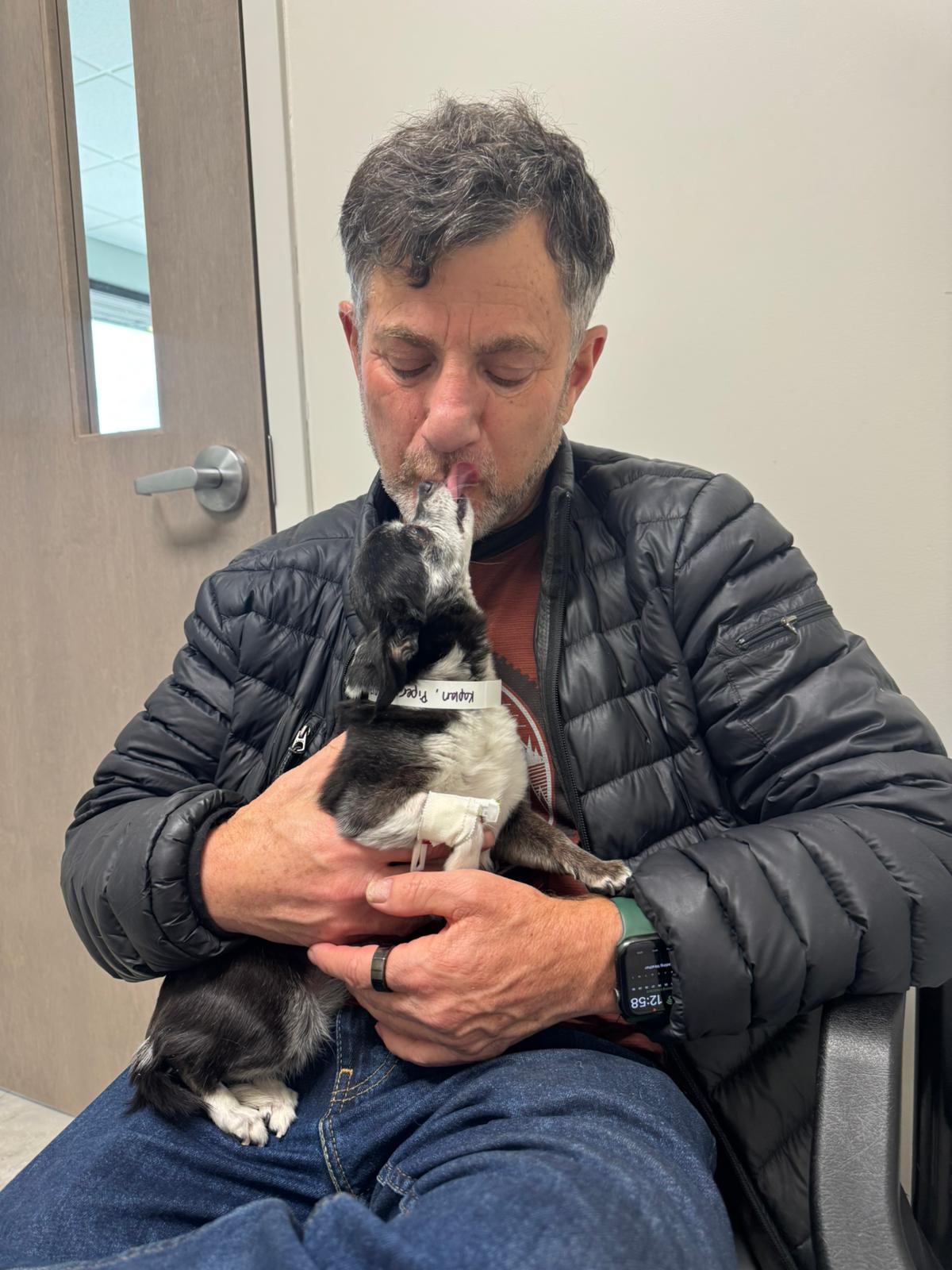
I’d never wanted another dog, especially another chihuahua. But Piper, a five-pound sweetheart who weighs roughly the same as a decent steak, has a way of disarming people she approves of.
She got me.
In January 2025 on a random Friday morning, Wendy and I rushed her to the emergency vet. She was gasping, essentially drowning in her own lungs.
Congestive heart failure.
The prognosis was blunt. She probably wasn’t leaving the hospital.
Our close friends Jeff and Kelly had purchased tickets for the four of us to see ZZ Top in Napa. We’d been looking forward to it for months. We canceled at the last minute and drove back to the veterinary hospital the next morning, braced for goodbye.
When the nurse brought Piper out, IV catheter still in her paw, she perked up as if someone had flipped a switch. When the vet walked in, she immediately started shaking like a leaf, very on brand. Against expectations, they discharged her that day.
The vet was pleased with how she had responded to treatment, furosemide to clear the fluid from her lungs, alongside heart medication, but concerned about our altitude. We live at 7,400 feet, which is not ideal for a dog with compromised cardiac function. Wendy, who has a gift for practical problem-solving that I find both admirable and slightly alarming, repurposed the oxygen generator from our home hyperbaric chamber and sealed Piper’s crate with plastic sheeting to create a small oxygen tent.
An hour a day.
Within weeks, the oxygen setup sat unused.
By summer, that same dog was flying downhill on hikes and charging back up as if she had somewhere important to be.
I remember the exact moment on the trail when it hit me.
Piper was slightly ahead of me. I never let her get too far because she’s a perfectly sized coyote or bobcat snack, sprinting toward something that probably smelled interesting. I caught myself thinking, This actually works.
The medication hadn’t done all the work. It had stabilized the system enough for everything else to follow. She wasn’t getting better because we loved her more or walked her smarter.
Biology still had the final say. We had simply given her body a fighting chance.
I stood there on that trail and thought about my father, his weevil cereal, his cheerful distrust of anything that came in a childproof bottle, and the lesson he taught me that outweighed both of those things: Follow the evidence. Update your beliefs. It had taken me longer to apply that lesson to one of his own beliefs than to almost anything else.
And I thought about Piper, sprinting downhill on twice-daily heart medication.
The aversion I’d inherited dissolved somewhere between the trailhead and watching her stop to look back at me as if I was the one who needed encouragement.
I’d spent two years reading the literature. I knew the evidence. Statins consistently lower apoB, stabilize vulnerable plaque, and reduce cardiovascular events.1
None of that information changed on the trail.
I did.
I had understood it intellectually. What I hadn’t done was feel it, until I watched a five-pound chihuahua sprint down a mountain on medication that was keeping her heart from filling with fluid it couldn’t drain.
After that trail moment, I went back to Dr. Goulder at Renew Health and asked about adding ezetimibe, something I’d come across in my own research. He agreed. Ezetimibe lowers LDL-C through a different mechanism than statins. It was a bigger decision than it might sound.
Statin dose-response isn’t linear; each doubling of the dose produces only a few additional percentage points of LDL-C reduction,2 while muscle-related side effects increase somewhat with dose. That doesn’t mean the clinical benefit diminishes, though; cardiovascular event reduction continues to track the absolute LDL-C reduction achieved, with no threshold where the benefit stops accruing.3
There’s a real tradeoff worth discussing. Higher-intensity statin therapy modestly increases the risk of new-onset diabetes, an effect concentrated mainly in people already close to a diabetes diagnosis.4 For most people at meaningful cardiovascular risk, the trade still favors treatment, but it’s a real cost, not a hypothetical one, and worth knowing about. In my case, I preferred adding ezetimibe, which offered another mechanism without relying entirely on a higher statin dose.
The numbers told two different stories after that. LDL-C kept dropping, into the fifties, then eventually the forties. On paper, it looked like exactly the kind of progress you’d frame and hang on the wall. ApoB told a different story. It sat in the sixties for more than a year, refusing to follow LDL-C down no matter how good the other number looked. Same blood draw, two numbers, pointing in different directions.
I didn’t abandon root causes. If anything, I doubled down.
Inflammation. Insulin signaling. Sleep. Periodontal health. Diet. Supplements, at least the ones supported by good evidence. Hiking. Strength training. The same obsessive attention to exercise and data that I had brought to the rest of my life.
I just stopped treating my body’s need for medication like a personal failure.
The shift wasn’t intellectual. It was emotional. It happened on a trail in Tahoe, inspired by a five-pound dog who took her medication twice a day, then went hiking.
That’s what happens when you stop asking whether treatment feels like surrender and start asking whether it helps you live the life you want to keep living.
Notes
- Cholesterol Treatment Trialists’ Collaboration. Efficacy and Safety of More Intensive Lowering of LDL Cholesterol. Lancet. 2010;376:1670–1681. See also Puri R, Nicholls SJ, Shao M, et al. Impact of Statins on Serial Coronary Calcification During Atheroma Progression and Regression. Journal of the American College of Cardiology. 2015;65:1273–1282. ↩
- Law MR, Wald NJ, Rudnicka AR. Quantifying Effect of Statins on Low Density Lipoprotein Cholesterol, Ischaemic Heart Disease, and Stroke: Systematic Review and Meta-Analysis. BMJ. 2003;326(7404):1423. ↩
- Law MR, Wald NJ, Rudnicka AR. Quantifying Effect of Statins on Low Density Lipoprotein Cholesterol, Ischaemic Heart Disease, and Stroke: Systematic Review and Meta-Analysis. BMJ. 2003;326(7404):1423. ↩
- Cholesterol Treatment Trialists’ (CTT) Collaboration. Effects of Statin Therapy on Diagnoses of New-Onset Diabetes and Worsening Glycaemia in Large-Scale Randomised Blinded Statin Trials: An Individual Participant Data Meta-Analysis. Lancet Diabetes & Endocrinology. 2024;12(5):306–319. ↩
Keep reading.
heartCEO.ai is for informational and educational purposes only and does not provide medical advice, diagnosis, or treatment. Always consult a qualified physician about your health and before making any medical decision. Seek urgent care for acute symptoms.